
Beyond Knowing
Building Leaders Who Execute Under Pressure

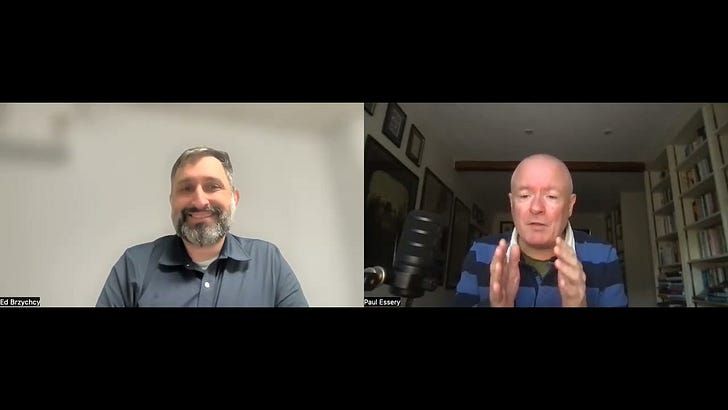
We have a problem in leadership development: most programs fail to create lasting behavior change. Not because the content is flawed, but because knowing something isn’t the same as doing it—especially when pressure mounts and old habits resurface.
Our conversation with Paul Essery illuminated this gap starkly. Organizations invest heavily in emotional intelligence training and psychological safety workshops, yet leaders revert to their old patterns the moment crisis hits. This is simple neurobiology, not a failure of character. When stress peaks, the brain shuts down recently learned behaviors and defaults to deeply ingrained responses.
The Learning-Execution Trap
Research confirms this “leadership knowing-doing gap” as a multifaceted experience involving cognitive, affective, and behavioral elements. We see it constantly: managers attend workshops, understand the concepts, then return to command-and-control approaches when deadlines loom. The training didn’t fail to inform them. It failed to build new automatic responses.
Neuroplasticity—the brain’s ability to form new neural pathways—requires repeated practice and meaningful feedback to reshape automatic responses. This takes time. Organizations rushing dramatic transformation programs miss this fundamental truth: sustainable change happens through consistent micro-interventions, not sweeping overhauls.
The military understands this. They train relentlessly before executing, building automatic responses that hold under fire. Business does the opposite—constant execution with training treated as an afterthought. This reversal creates leaders who know what to do but lack the capacity to execute when it counts.
Thanks for reading Lead from the Front! This post is public; please feel free to share the knowledge.
The After-Action Review Gap
Called “one of the most successful organizational learning methods yet devised,” the after-action review was developed by the US Army in the 1970s to help soldiers learn from both mistakes and achievements. The process is simple: What was supposed to happen? What actually happened? How do we improve next time?
Yet businesses rarely implement this practice. Why? They perceive it as risky. What if feedback is poor? What if suggestions are impractical? What if giving employees this level of agency backfires?
But here’s what goes unsaid: NOT implementing feedback loops is far riskier in today’s environment. Without structured reflection, organizations repeat the same mistakes while competitors adapt. The risk isn’t in asking for feedback—it’s in operating blind.
To set the stage for effective AARs, leaders must first foster a culture of transparency, selflessness, and candor in which team members can challenge current ways of thinking. This means leaders walk through their own open doors first. They demonstrate vulnerability in their learning. They respond to feedback with visible action, not defensiveness.
Making Change Stick: Three Practical Steps
First, embed five-minute reflections after completing tasks. Not lengthy debriefs—disciplined moments asking what worked, what didn’t, and what changes next time. Getting people to visualize themselves achieving new behaviors and to plan how they’ll feel when they do so helps close the knowing-doing gap. These micro-conversations compound over time, building the habit of continuous improvement.
Second, focus mentorship on edge cases. New leaders struggle most with uncomfortable situations: delivering critical feedback, navigating conflict, and making decisions with incomplete information. Social interaction makes the brain encode information more deeply, recall it more easily, and act upon it more often. When mentors create safe spaces to practice difficult scenarios, they accelerate capability while building resilience.
Third, delegate outcomes rather than tasks. Eisenhower’s D-Day orders fit on one page: here are your objectives, make it happen. This works only when leaders have systematically built team capacity through graduated challenges and continuous feedback. Trust isn’t given blindly—it’s earned through deliberate capability building.
The Unglamorous Truth
We’re not advocating revolution. We’re insisting on evolution—incremental, evidence-based practices that transform how leaders respond when pressure hits. The work lacks glamour. The timeline extends over months and years, not weeks.
But organizations that commit to building capacity alongside knowledge create advantages competitors cannot imitate: leaders who execute under pressure, teams that adapt without fracturing, and cultures where improvement becomes automatic rather than aspirational. The gap between knowing and doing closes not through better training content, but through better training design—one that respects how human brains actually learn, change, and perform under stress.
Essery, P. (Host). (2025, October 27). Interview with Ed Brzychcy [Video]. The Chief Uncensored. YouTube.