
Drafting the Declaration
Great works don’t appear overnight.

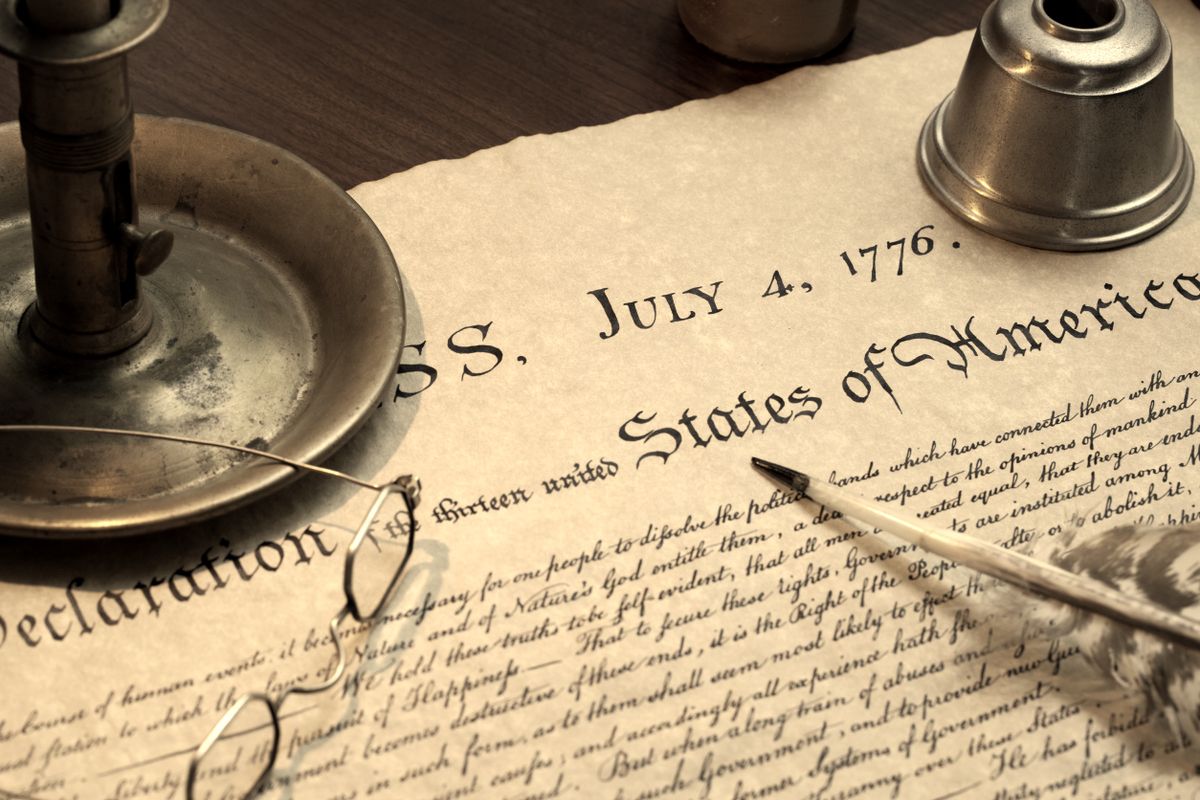
The Declaration of Independence, arguably the seminal document in establishing the United States, wasn’t formed overnight. Like all great works. It went through its growing pains, rough drafts, and committee reiterations. Similar to much of our modern work, it is a product of compromise and debate.
Thomas Jefferson was not the intended author. Initially, the Lee Resolution of the Continental Congress assigned the responsibility to Richard Henry Lee, a delegate from Virginia.
Resolved, That these United Colonies are, and of right to be, free and independent States, that they are absolved from all allegiance to the British Crown, and that all political connection between them and the State of Great Britain is, and ought to be, totally dissolved. That it is expedient forthwith to take the most effectual measures for forming foreign Alliances. That a plan of confederation be prepared and transmitted to the respective Colonies for their consideration and approbation.
Lee, however, soon found himself astride other responsibilities, both at the convention and home. He was also asked to draft the original Articles of Confederation, the original bylaws for the federal government (which were quickly replaced after much post-Revolutionary War interstate strife and economic challenges by the Constitution in 1789). He then had to return home to tend to his wife, who had fallen ill.
Do you find this post interesting? Please share it with others.
There was some debate afterward, and a committee was formed with Robert Livingston, Roger Sherman, John Adams, Benjamin Franklin, and Thomas Jefferson. The measure of the discussion and debate within the committee is unrecorded, except for some private diaries. However, Timothy Pickering of Massachusetts later wrote to a friend, providing this insight and quoting Adams.
Jefferson proposed to me to make the draft. I said, 'I will not,' 'You should do it.' 'Oh! no.' 'Why will you not? You ought to do it.' 'I will not.' 'Why?' 'Reasons enough.' 'What can be your reasons?' 'Reason first, you are a Virginian, and a Virginian ought to appear at the head of this business. Reason second, I am obnoxious, suspected, and unpopular. You are very much otherwise. Reason third, you can write ten times better than I can.' 'Well,' said Jefferson, 'if you are decided, I will do as well as I can.' 'Very well. When you have drawn it up, we will have a meeting.'
Jefferson himself had a different recollection of the events.
Mr. Adams memory has led him into unquestionable error. At the age of 88 and 47 years after the transactions,….this is not wonderful. Nor should I….venture to oppose my memory to his, were it not supported by written notes, taken by myself at the moment and on the spot…. The Committee of 5 met, no such thing as a sub-committee was proposed, but they unanimously pressed on myself alone to undertake the draught. I consented; I drew it; but before I reported it to the committee I communicated it separately to Dr. Franklin and Mr. Adams requesting their corrections;….and you have seen the original paper now in my hands, with the corrections of Dr. Franklin and Mr. Adams interlined in their own handwriting. Their alterations were two or three only, and merely verbal. I then wrote a fair copy, reported it to the committee, and from them, unaltered to the Congress
The committee operated over nearly a month, from June 11 to July 5, 1776, presenting the original final draft before the Convention on June 28. Jefferson managed to pen the original final draft, which was not his primary work. The convention remained highly active throughout this time, meeting and discussing government affairs for the rebellious colonies.
The original draft is available online and within the National Archives. It contains not only Adams’ and Franklin’s corrections but also many sidebar and margin notes about presenting the document, possible reactions from the other delegates, and how to respond to them. Reading the document and the notes therein remains as illuminating as it is inspiring.
Our steps toward nationhood were not well-defined and certain, and required much work and deliberation. And many of these feelings, sentiments, and arguments are kept within the notes around the draft of an important document.
Great things don’t happen all at once, and the more we recognize the steps taken to get to them, the more we can appreciate the greatness.
This article is sourced from and cites several sources, including ConstitutionFacts.com, LibertyFund.org, and the U.S. National Archives.