The Micro-Habit Architecture
Building Behaviors That Survive Pressure


Every executive knows the feeling. You’ve committed to staying calm under fire, to pausing before responding, to modeling the leadership presence your role demands. Then the crisis hits—a board member’s pointed question, a key client’s unexpected departure, a team member’s public failure—and the carefully constructed intentions evaporate. You react exactly as you always have.

Why Your Brain Betrays You Under Pressure
Our understanding of stress and behavior has advanced dramatically in the past two decades, and the findings should fundamentally reshape how we approach leadership development. Amy Arnsten’s research at Yale demonstrates that even mild acute stress causes rapid and dramatic loss of prefrontal cognitive abilities—the very capacities we rely on for impulse control, thoughtful decision-making, and goal-directed behavior. The mechanism is chemical: stress hormones weaken synaptic connections in the prefrontal cortex, flipping the brain from “reflective to reflexive” control, as Arnsten calls it.
Here’s what this means practically: under pressure, your brain doesn’t access your good intentions. It accesses your habits.
Schwabe and Wolf’s 2009 study in the Journal of Neuroscience confirmed this experimentally—stressed participants showed behavior insensitive to changed outcomes, the signature of habit rather than deliberate choice. The evolutionary logic makes sense: rapid, reflexive responses save lives in dangerous situations. But for executives needing nuanced judgment precisely when stakes are highest, this neural architecture creates a fundamental problem.
The implication reshapes everything we think we know about leadership development: behaviors designed to survive pressure must be automatic enough to bypass compromised prefrontal function. Awareness isn’t enough. Commitment isn’t enough. Only automaticity survives stress.
The Willpower Research Executives Don’t Know About
For years, we operated under Roy Baumeister’s ego depletion theory—the idea that willpower functions like a limited resource, depleted by use. The practical advice followed logically: preserve your willpower for important decisions, expect self-control to fail after exertion, and structure your most demanding work for when reserves are full.
The theory has collapsed under rigorous testing.
A 2016 replication attempt across 23 laboratories found essentially no effect. A 2021 study across 36 labs with over 3,500 participants found that the data were 4 times more likely under the null hypothesis than under the ego depletion hypothesis. What once seemed like settled science now appears to have been statistical noise amplified by publication bias.
The alternative explanation matters more than the failed theory: people with high self-control don’t resist temptation better—they structure their lives so they encounter fewer temptations. Success comes not from willpower reserves but from environmental design and automated responses that don’t require willpower at all.
This is why telling an executive to “manage your anger” fails while “take one deep breath when criticized” succeeds. The first requires prefrontal-mediated deliberation precisely when emotional arousal compromises prefrontal function. The second delegates action initiation to situational cues, bypassing deliberation entirely.
Why Specificity Changes Everything
Peter Gollwitzer’s research on implementation intentions provides the mechanism. His meta-analysis of 94 studies with over 8,400 participants found that “if-then” plans produce a medium-to-large effect on goal attainment—substantially beyond the effect of goal intentions alone. Across 422 studies, Sheeran found that people translate strong intentions into action just 53% of the time. Implementation intentions close this gap.
The “if-then” structure works through two pathways. First, the mental representation of the specified situation becomes highly activated—participants in studies recognized situational cues faster, and this heightened accessibility mediated goal completion. Second, strong associative links form between situation and action, creating what Gollwitzer calls “strategic automaticity”—deliberate planning that produces automatic execution.
Consider the contrast in breast self-examination studies: 100% of women who formed implementation intentions performed the examination, versus 53% of controls with equally strong intentions. Same motivation. Same goal commitment. Radically different results based solely on the specificity of planning.
Designing Micro-Habits for Your Context
BJ Fogg’s Behavior Model provides the systematic framework for applying these insights. The formula is deceptively simple: Behavior equals Motivation plus Ability plus Prompt. The insight that makes this practical is the compensatory relationship between motivation and ability. When ability is extremely high, the behavior is trivially easy—people act even with minimal motivation.
Fogg’s key insight: motivation fluctuates constantly and is unreliable; ability can be engineered. A behavior requiring substantial willpower will fail precisely when stress depletes executive function. A behavior small enough to execute even during dips in motivation will persist.
This means effective micro-habits share specific characteristics. They require less than 30 seconds. They demand minimal cognitive load. They’re anchored to existing routines that serve as reliable prompts. And critically, they must be practiced consistently in calm contexts before they’re needed under pressure.
Phillippa Lally’s research at UCL finally quantified the timeline: habit formation takes an average of 66 days, with a range from 18 to 254 days depending on complexity. The popular “21-day” myth has no empirical support. Simpler behaviors—such as drinking water after breakfast—reach automaticity within weeks. Complex behaviors can take months. The pattern follows an asymptotic curve; initial repetitions yield large automaticity gains that diminish over time, eventually plateauing.
The Sequencing Problem
Which habits should we build first? The research suggests starting with the simplest behaviors maximizes success. Lally’s data showed simple actions reached automaticity faster, and early wins build self-efficacy for pursuing larger changes.
We’ve found this sequencing works for most leadership contexts:
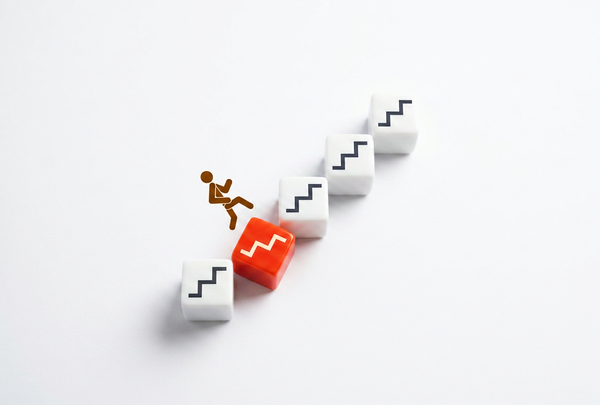
- First (Weeks 1-4): One deep breath when receiving any criticism or negative feedback. This is foundational because emotional regulation precedes all other leadership capacities under stress. The behavior is nearly impossible to fail, requires no external resources, and creates the physiological pause that enables everything else.
- Second (Weeks 5-8): Three-second pause before responding in any difficult conversation. Add this only when the breath has become automatic—when it happens without conscious thought 80% or more of the time. The pause extends the window created by the breath, allowing prefrontal re-engagement.
- Third (Weeks 9-12): Weekly verbal acknowledgment of one value-aligned decision in team settings. This shifts from private to public behavior, modeling the regulation you’ve internalized while reinforcing organizational values.
- Fourth (Weeks 13-16): Daily three-minute authentic connection with one team member. This builds the relationship infrastructure that makes all other leadership capacities matter.
The critical discipline is refusing to add complexity before automaticity is established. Our data consistently shows that two solid habits outperform five inconsistent ones. Measure adoption—did the behavior occur?—not satisfaction. If you’re below 80% execution on the current habit, simplify further before progressing.
Where to Start on Monday Morning
Transform one leadership intention into an if-then plan this week. Not three. Not a comprehensive behavior change program. One.
Pick the moment that most reliably triggers your least effective leadership response. Define the specific situation. Define the specific micro-behavior—something requiring less than thirty seconds that you could execute even when exhausted. Write it down in the format: “If [specific situation], then I will [specific behavior].”
Then practice it daily for ten weeks, tracking only whether the behavior occurred. Not how well. Not how it felt. Just whether it happened.
The research is that behaviors that survive pressure aren’t built through insight, commitment, or willpower. They’re built through repetition so consistently that they bypass the very brain structures that stress impairs. The executive who masters micro-habit architecture doesn’t become someone with better self-control. They become someone who needs less of it.
This essay draws on research from Arnsten (Nature Reviews Neuroscience, 2009), Schwabe & Wolf (Journal of Neuroscience, 2009), Gollwitzer & Sheeran (Advances in Experimental Social Psychology, 2006), Lally et al. (European Journal of Social Psychology, 2010), Fogg (Persuasive Technology Conference, 2009), and the 2021 Vohs et al. 36-lab ego depletion replication.
Contact us for a complete list of works cited.