When “AI Practice” Meets Monday Morning
AI doesn’t reduce work, it changes it.

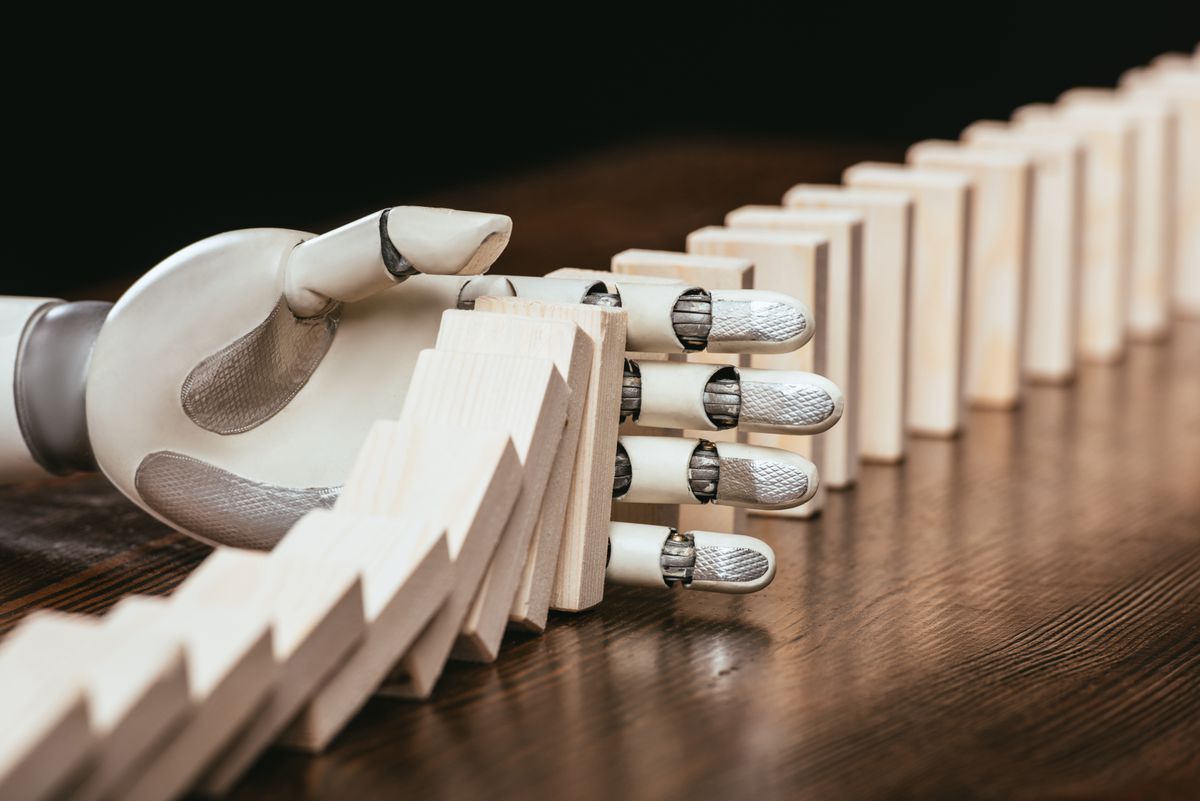
Aruna Ranganathan and Xingqi Maggie Ye get the diagnosis exactly right in their recent HBR piece. Their eight-month study at a U.S. tech company found what many of our clients are living through: AI doesn’t reduce work. It accelerates it, expands it, and bleeds it into hours that used to belong to recovery. Workers managed multiple AI threads simultaneously, revived deferred tasks because the tool made them feel manageable, and gradually lost the natural pauses that once prevented burnout. The researchers observed role creep, cognitive fatigue, and a pattern where workload expansion masqueraded as productivity.
We’ve seen the same thing.
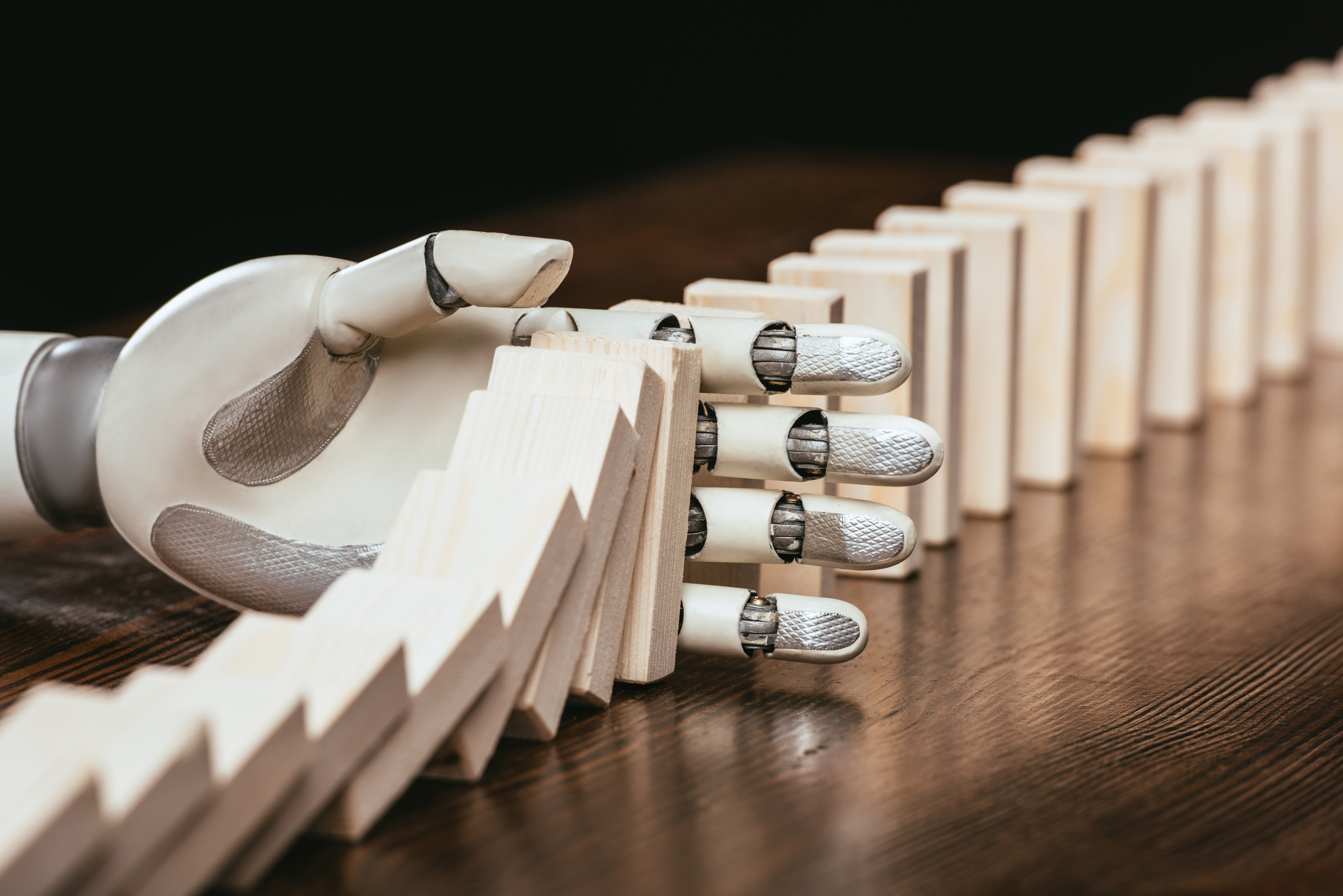
Where Ranganathan and Ye land, though, is where the harder work begins. They recommend organizations develop an “AI practice”—shared norms around intentional pauses, sequenced work, and human grounding. The instinct is correct. But our experience with implementation science suggests that norms, without the behavioral infrastructure to sustain them, become exactly the kind of theory-in-use gap that accelerates the problem.
We know what that gap looks like. Organizations that say “we value work-life balance” while rewarding midnight email responses. Companies that announce “focus time” policies that evaporate the first time a quarterly deadline tightens. Norms are what we say we believe. Behavior under pressure is what we actually believe. Amy Arnsten’s research on stress and prefrontal cortex function explains why: under cognitive load, the brain reverts to habitual patterns. If the habit is “one more prompt before bed,” no amount of stated policy overrides it without deliberate retraining.
This is where we think the conversation needs to go next. Ranganathan and Ye’s “AI practice” requires the same implementation rigor we’d apply to any behavioral change initiative. That means three things organizations typically skip.
First, specificity. “Take intentional pauses” is the AI equivalent of “manage your stress.” It sounds reasonable, and it’s nearly impossible to execute consistently. What works instead: a concrete micro-habit, like closing the AI tool at a fixed time and not reopening it. Not guideline. A behavior small enough that compliance is binary—did you do it or didn’t you? Phillippa Lally’s research at University College London found that automaticity for simple habits typically takes 66 days on average. Organizations expecting “AI practices” to stick after a policy memo are operating on a timeline that doesn’t match the biology.
Second, measurement that catches the problem early. Ranganathan and Ye note that intensification often looks like productivity in the short run. That’s exactly why organizations need leading indicators—not output metrics. Connection quality between managers and reports, the frequency of developmental conversations, and decision quality under time pressure all predict whether AI adoption is building sustainable capacity or burning through it. If a team’s output doubles but their manager hasn’t had a genuine one-on-one in three weeks, that’s not a success story. It’s a leading indicator of attrition.
Third, equity. The study touches on this obliquely, but the data from secondary analyses is stark: junior employees and associates reported burnout at significantly higher rates than C-suite leaders. This makes structural sense. Senior leaders have more control over their own workflows and more organizational permission to set boundaries. Entry-level employees absorb the intensification with less autonomy and fewer options. Any “AI practice” that doesn’t account for power differentials in who can actually enforce boundaries will reproduce the pattern Ranganathan and Ye documented—with the costs concentrated among those least able to push back.
None of this diminishes the contribution of the original research. The finding that AI’s default trajectory is intensification, not contraction, is an important corrective to the productivity narrative dominating most boardroom conversations. But diagnosis without implementation protocol is how we get organizations that understand the problem intellectually and reproduce it operationally. We’ve watched that cycle play out in leadership development, culture change, and DEI work for years. AI adoption is now running the same pattern at faster speed.
The question for executives isn’t whether to develop an AI practice. It’s whether they’re willing to treat that practice as a behavior change initiative that takes months, requires measurement, and demands the same progressive exposure and coaching infrastructure we’d build for any complex skill. If the answer is a memo and a hope, we already know the outcome. Ranganathan and Ye showed us exactly what it looks like.
Original Article: Ranganathan, A., & Ye, X. M. (2026, February 9). AI doesn’t reduce work—it intensifies it. Harvard Business Review. https://hbr.org/2026/02/ai-doesnt-reduce-work-it-intensifies-it